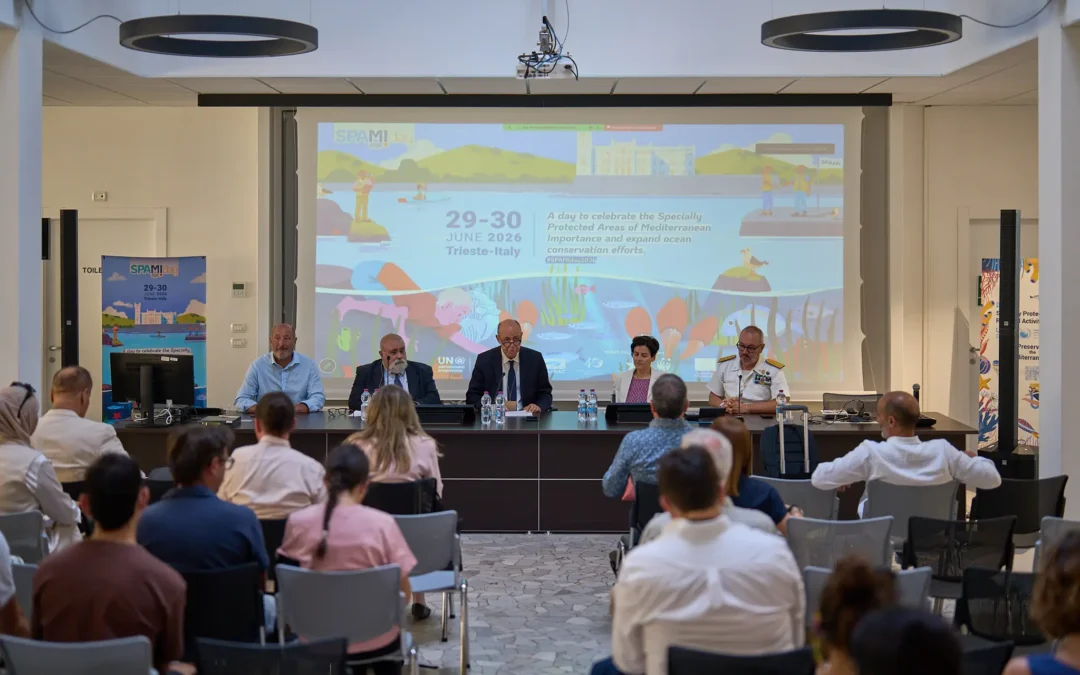
Two days of intense exchange and collaboration, during which scientists, experts, managers of marine protected areas, and partners shared experiences, presented practical solutions, and explored key challenges related to ecosystem restoration, effective protected area management, and the strengthening of regional cooperation.
Now in its fifth edition, SPAMI Day 2026, organized by SPA/RAC in collaboration with the Miramare Marine Protected Area, took place on 29–30 June in Trieste.
The event brought together representatives of the Specially Protected Areas of Mediterranean Importance (SPAMIs), national authorities, regional organizations, researchers, and conservation practitioners from across the Mediterranean basin. The SPAMI network, established under the Barcelona Convention, now brings together 39 of the most important marine and coastal protected areas in the Mediterranean. Recognized for their exceptional natural value and for the high quality of their management, these sites form a unique regional community committed to strengthening the conservation of the marine and coastal environment through collective action.
Photos: SPA/RAC, Giovanni Aiello
SPAMI Day 2026 placed at the center of the discussion some of the most urgent issues for Mediterranean conservation: marine ecosystem restoration, effective protected area management, and the strengthening of regional cooperation. Through expert presentations, panel discussions, and the exchange of experiences among SPAMI site managers, it became clear that successful restoration efforts depend first and foremost on reducing pressures on marine environments and on an approach based on solid scientific evidence, long-term monitoring, and adaptive management. Participants also highlighted the need to integrate the impacts of climate change into restoration strategies, stressing that such actions must complement, and not replace, effective conservation measures. Continuous investment and close collaboration among Mediterranean countries were identified as essential elements to ensure long-term success.
The event also highlighted the value of the SPAMI network as a tool for cooperation among marine and coastal protected areas in the Mediterranean, fostering the sharing of experiences and the development of coordinated responses to common conservation challenges. Through concrete examples of sustainable financing, governance, species protection, and transboundary cooperation, the role of the SPAMI network was emphasized in strengthening the management capacities of sites and promoting a shared approach to safeguarding natural heritage.
Among the most significant examples, the Pelagos Sanctuary was highlighted as a model of transboundary cooperation under the Barcelona Convention. Its experience demonstrates how marine ecosystems, which do not recognize political borders, require international coordination to ensure the conservation of highly migratory species and shared habitats.
SPAMI Day 2026 concluded with a renewed commitment from SPAMI site managers and partners to strengthen cooperation in the Mediterranean, promoting more effective management of protected areas, ecosystem restoration, and knowledge exchange within the SPAMI network.
Photos: SPA/RAC, Giovanni Aiello