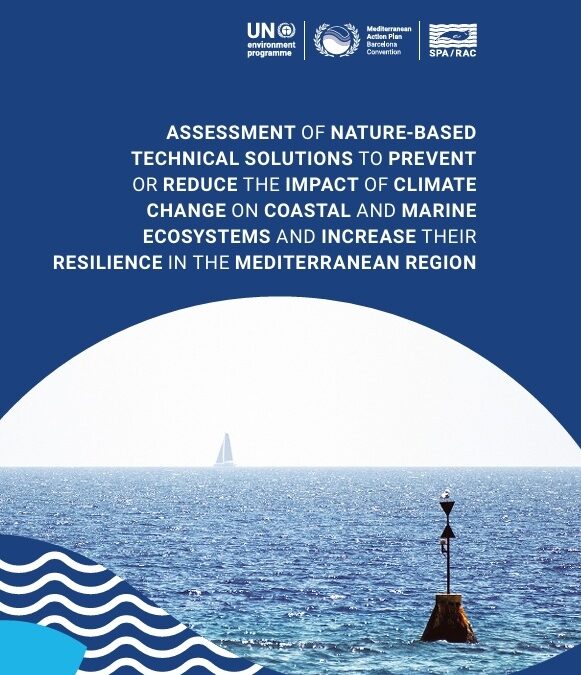
The new SPA/RAC publication, entitled Assessment of Nature-based Technical Solutions to Prevent or Reduce the Impact of Climate Change on Coastal and Marine Ecosystems and Increase Their Resilience in the Mediterranean Region, analyses the role of Nature-based Solutions (NbS) in preventing and reducing the impacts of climate change on marine and coastal ecosystems and in strengthening their resilience in the Mediterranean region, which is increasingly subject to climate change-related pressures. Key risk factors include sea-level rise, increasing marine temperatures, the increasing frequency of extreme weather events, and reduced freshwater inputs. Coastal erosion is an additional factor.
These pressures, together with other anthropogenic threats, contribute to the degradation of marine and coastal ecosystems, the reduction of ecosystem services, and increased risks to human communities and infrastructure.
The publication identifies several obstacles that may limit their wider application in the Mediterranean region.
These include:
- a lack of common understanding, terminology and implementation processes, which can hamper institutional and policy uptake;
- insufficient data and ecological knowledge to support informed decision-making;
- challenges in stakeholder engagement;
- institutional constraints; and
- reliance on short- or medium-term project funding, which can limit the ability to assess the long-term effectiveness of NbS initiatives.
To promote greater integration of Nature-based Solutions into Mediterranean climate change adaptation strategies, the publication presents the results of the assessment and proposes a practical framework structured into several phases for assessing NbS.
The document also compiles examples of good practices, highlights the most common challenges, and provides recommendations for integrating Nature-based Solutions into climate change adaptation strategies.
The publication also includes the outcomes of the regional training workshop on Nature-based Solutions to reduce the impacts of climate change on coastal and marine ecosystems, held in Gökova, Türkiye, in December 2025. The workshop was organised in conjunction with the workshop dedicated to climate change adaptation strategies for coastal and marine ecosystems and is documented in Appendix 2 of the publication.