Youth, Global Governance, and the Challenge of Marine Protection
World Ocean Day, celebrated on June 8, is an international event dedicated to the protection of marine ecosystems and to raising awareness of the ocean’s fundamental role in climate regulation and life on Earth. The very name of the day recalls the idea of a single global ocean system, which is why it is referred to as “World Ocean Day” in the singular rather than “World Oceans Day.” The 2026 edition is expected to be the largest ever held, with thousands of events in more than 178 countries and the involvement of millions of people.
This year’s guiding theme is “Strong Marine Protected Areas for Our Blue Planet,” which places the strengthening of Marine Protected Areas (MPAs) at the center as a fundamental tool for the conservation of marine ecosystems and biodiversity.
An Expanding Global Network
Today, World Ocean Day involves a network of more than 2,000 organizations in approximately 180 countries, with events taking place throughout the year. Since 2016, the movement has been supported by a Youth Advisory Council, which has strengthened the role of young people in global environmental governance, together with dozens of students from numerous countries.
The 2026 Theme: Marine Protected Areas and Global Objectives
The theme of the 2026 edition is “Strong Marine Protected Areas for Our Blue Planet.” The objective is to strengthen the creation and effectiveness of Marine Protected Areas (MPAs), considered a key tool for the conservation of marine ecosystems.
The theme is part of the framework of the international “30×30” commitments, which provide for the protection of 30% of lands and oceans by 2030, and is linked to the recent ratification of the High Seas Treaty, aimed at protecting biodiversity in international waters.
According to the global movement, these areas are essential for preserving biodiversity, supporting coastal economies, ensuring food security, and contributing to the climate stability of the planet. However, their implementation requires international cooperation, monitoring, and constant political commitment.
From the Global to the Mediterranean: A Fragile and Strategic Sea
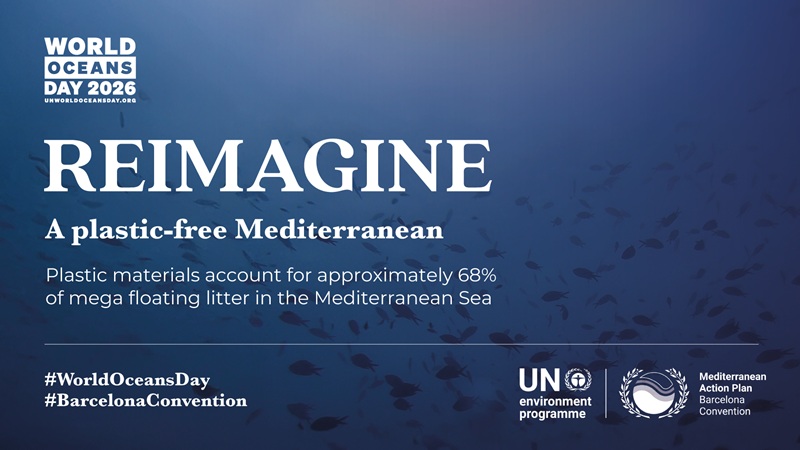
Global dynamics are also reflected in regional seas, particularly the Mediterranean Sea, one of the richest basins in terms of biodiversity but also among the most vulnerable in the world. The Mediterranean is subject to strong environmental pressures related to plastic pollution, maritime traffic, coastal development, and the effects of climate change.
In this context, the role of the United Nations Environment Programme dedicated to the Mediterranean, UNEP/MAP (Mediterranean Action Plan), is central in coordinating cooperation among the countries of the region and strengthening environmental protection policies. The programme is in fact one of the main governance instruments for reducing pollution, protecting marine biodiversity, and promoting the sustainable development of coastal areas.
As a semi-enclosed sea, the Mediterranean is particularly exposed to the accumulation of pollutants and microplastics, making coordinated policies and effective environmental protection instruments necessary.
A Continuous Commitment
World Ocean Day today represents a global platform for collective action that brings together governments, schools, NGOs, businesses, and citizens. The ocean, which produces more than half of the oxygen we breathe and regulates the Earth’s climate, is at the center of international environmental strategies.
In this spirit, the movement’s message calls for a shared responsibility that goes beyond June 8 and extends throughout the year: one ocean, one climate, one future.