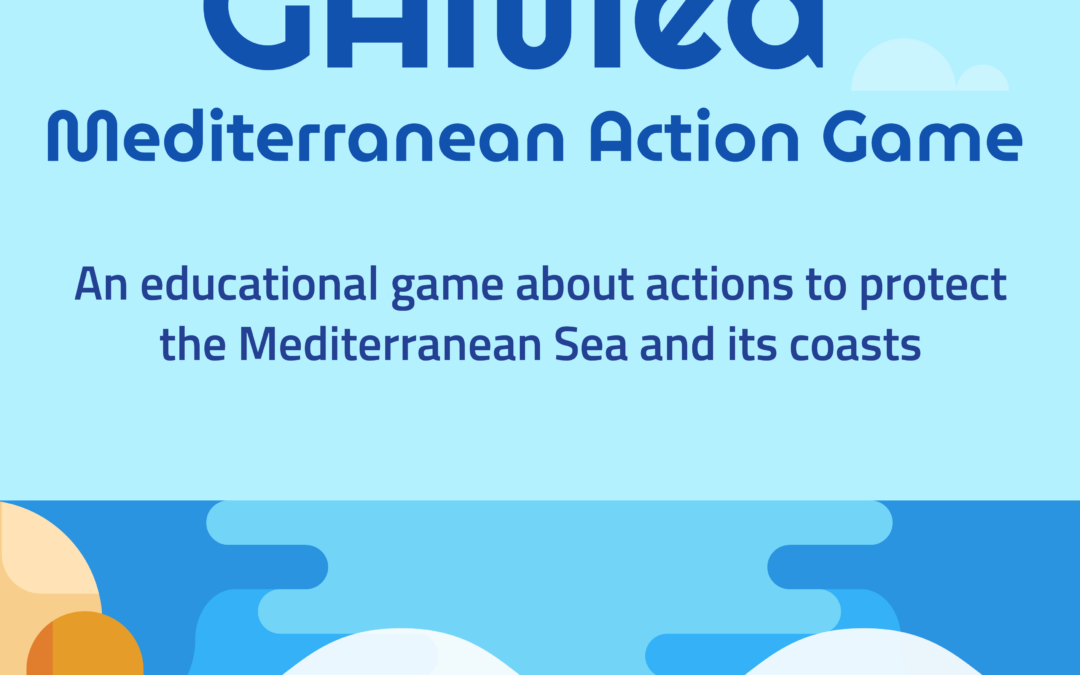
GAMed is an educational game developed by the Regional Activity Centre for Information and Communication (INFO/RAC), also with the contribution of the students of the “Vito Volterra” Scientific High School of Ciampino, who participated in the School-Work Training Path (PFSL) entitled “A lesson in environmental governance: discovering actions for the Mediterranean Sea and its coasts”, organized by the Institute for Environmental Protection and Research (ISPRA).
GAMed allows participants to explore in a simple and interactive way the main themes of environmental governance of the Mediterranean Sea and its coasts.
Through the game, students approach the key concepts related to the Mediterranean Action Plan of the United Nations Environment Programme (UNEP/MAP), the Barcelona Convention, and the Regional Activity Centres (RAC). The aim is to make complex content more accessible, transforming it into an active and engaging learning experience, capable of raising awareness among participants about the work of these institutions and promoting greater environmental awareness.
Play and learning
GAMed is designed as a participatory educational tool, suitable for students aged 14 and over. It can be used both individually and in groups, always with the support of a facilitator, who may be a teacher, researcher, educator, or science communicator.
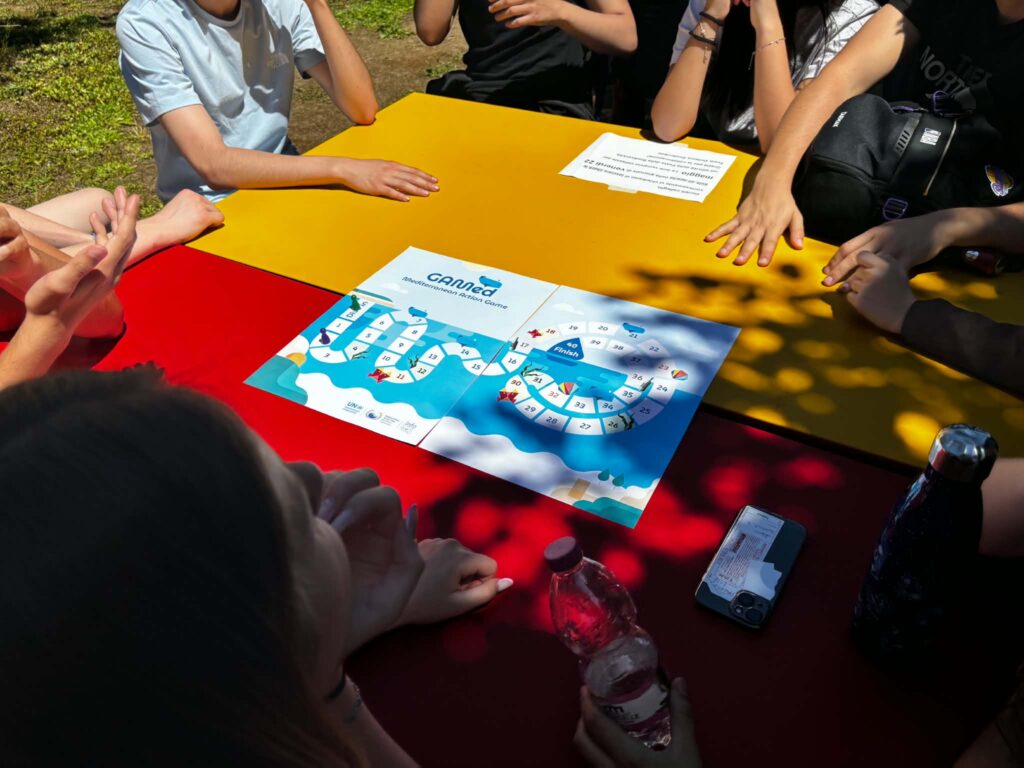
The game is developed on a board with an attractive design that recalls the shapes, colors, and symbols of the Mediterranean Sea. Each participant, through a playing piece, moves along a step-by-step path by rolling a dice and advancing square by square.
During the game, different types of situations alternate. The QUESTION squares allow players to test their knowledge on environmental governance topics and encourage discussion among participants, with questions divided into different levels of difficulty. The EXPLANATION squares provide brief insights guided by the Facilitator, useful for clarifying and contextualizing the content. The SPECIAL squares, on the other hand, introduce more dynamic and symbolic elements related to the marine environment, making the game more engaging and unpredictable.
The game mechanics alternate moments of challenge and learning: a correct answer may allow players to move forward or gain an advantage, while in case of a wrong answer the turn passes to the next player. In this way, the game promotes attention, participation, and collaboration.
A project born from collaboration with students
One of the most significant aspects of GAMed is the active involvement of students in its design and development. The project is part of a training pathway that promotes direct participation and co-design, enhancing the role of the new generations in environmental sustainability and Ocean Literacy topics.
Through this experience, the game becomes not only an educational tool, but also a concrete example of dialogue between education, research, and active citizenship.
A shared experience
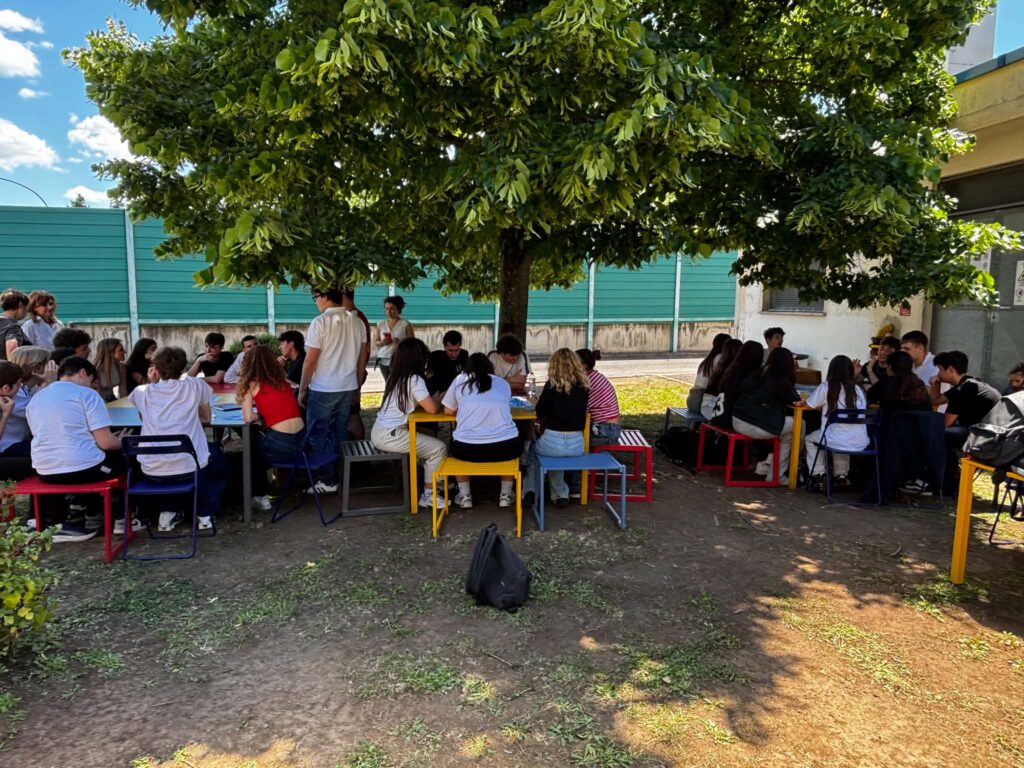
During presentation and testing activities, the game is carried out in group sessions involving large groups of students in a workshop context. Participants thus have the opportunity to put into practice what they have learned during the training pathway, transforming knowledge into direct experience.
In this way, GAMed becomes an opportunity to combine learning, collaboration, and environmental awareness, offering an innovative and participatory approach to the protection of the Mediterranean.