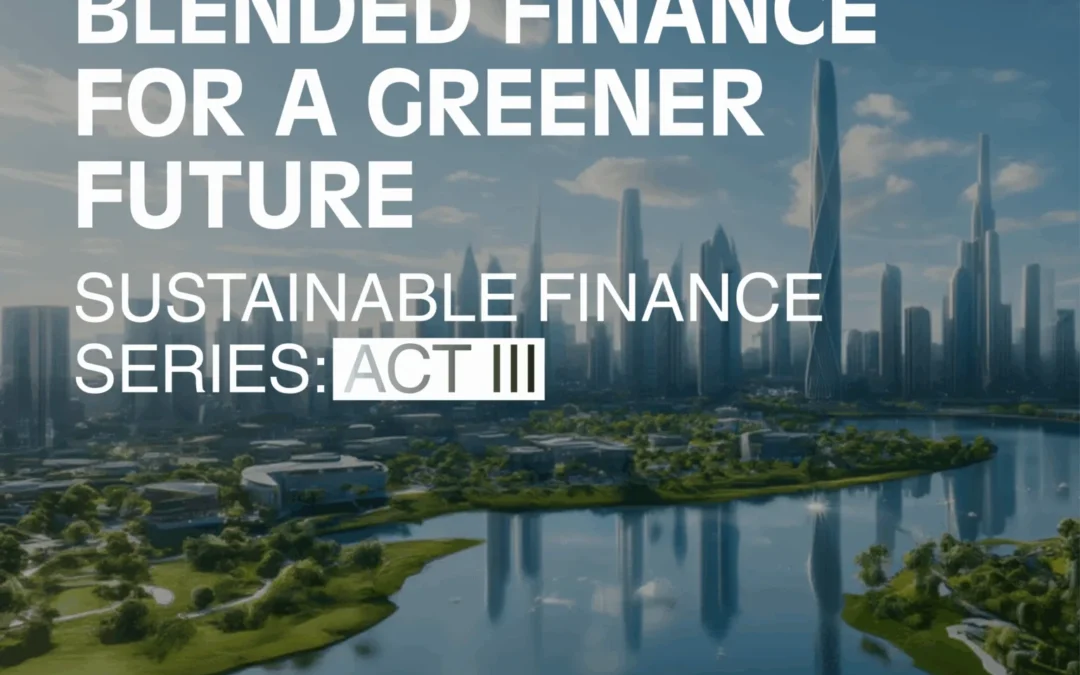
Plan Bleu has announced the eight core chapters for its upcoming volume, “Blended Finance for a Greener Future”, part of the organization’s 2026–2027 work program. The book will explore how combining public resources with private investment can help close the sustainability funding gap across the Mediterranean region.
The call for papers sparked widespread interest, receiving 28 proposals from 38 authors. The final selection demonstrates a strong commitment to both gender and regional diversity: twenty of the contributors are women, while 27 authors are based at universities in Southern and Eastern Mediterranean countries.
The volume opens with research tracking the allocation of climate finance, revealing a persistent imbalance between mitigation and adaptation efforts across multiple countries. Other chapters examine why traditional de-risking mechanisms often fail to attract private capital, particularly in local banks that struggle to manage adaptation risks. Several contributions provide practical frameworks for assessing market readiness, evaluating legal, fiscal, and environmental governance factors that influence private investment in the region.
Social inclusion is also a key theme. One study highlights how blended finance structures frequently overlook the informal economy, which accounts for up to 60% of GDP in parts of the Southern and Eastern Mediterranean. Another case study focuses on Tunisia, showing how microfinance institutions can pair green financing with women’s empowerment initiatives, demonstrating that sustainable investment can also advance social goals.
The volume further delves into marine conservation, linking financial flows to measurable outcomes such as seagrass restoration, while exploring cutting-edge digital solutions like blockchain to enhance transparency and prevent “blue-washing” in coastal projects.
Under the scientific coordination of Dr. Constantin Tsakas, Chief Economist at Plan Bleu, the volume is expected to be published by late 2026 or early 2027. It will follow two previous editions that examined environmentally harmful subsidies and the role of green finance in strengthening resilience across the Mediterranean.