Funding for Nature -base Solutions is still limited at the global level
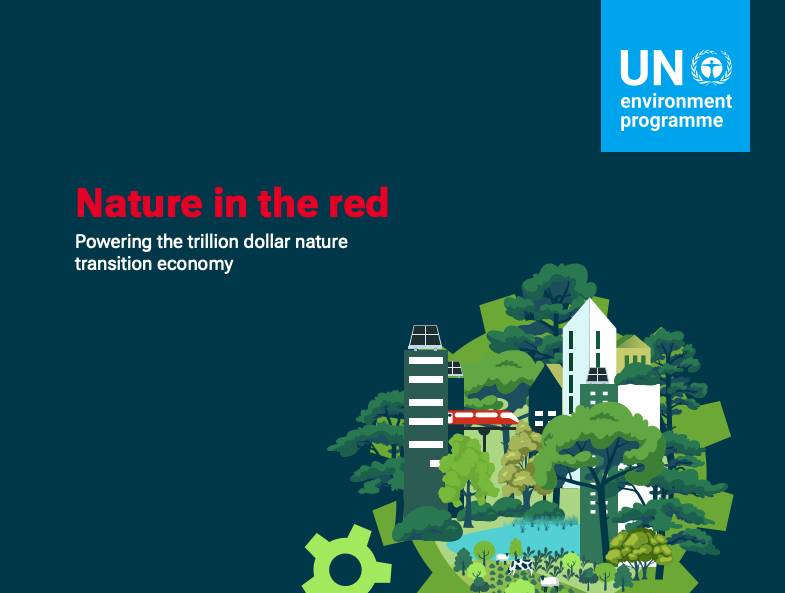
A clear imbalance emerges from the new report by UNEP, the United Nations Environment Programme: for every US dollar the world invests in protecting nature, as much as 30 dollars are spent destroying it.
The report “The State of Finance for Nature 2026“, which uses data from 2023, tracks global finance flows to NbS, the Nature-base Solutions, and finds:
- US$7.3 trillion in total finance flows with negative impacts on nature,
- of which US$4.9 trillion comes from private sources, heavily concentrated in a few sectors: utilities, industry, energy, and basic materials;
- US$2.4 trillion in environmentally harmful public subsidies for fossil fuels, agriculture, water, transport, and construction in 2023.
- US$220 billion in finance flows for NbS, with nearly 90% coming from public sources, reflecting a steady increase in domestic and international support for NbS.
Private investment in NbS amounts to just US$23.4 billion, representing only 10% of total NbS investments. As a result, businesses and the financial sector have yet to invest at scale in NbS, despite growing awareness of nature-related dependencies, risks, and opportunities. To meet global biodiversity, climate, and land restoration targets, NbS investment must increase 2.5 times to US$571 billion annually by 2030—equivalent to just 0.5 per cent of global GDP.
According to Inger Andersen, Executive Director of UNEP,
“If you follow the flow of money, you see the scale of the challenge ahead of us. We can either invest in nature’s destruction or power its recovery—there is no middle ground. While financing for nature-based solutions is moving forward slowly, harmful investments and subsidies are rapidly increasing. This report offers leaders a clear roadmap to reverse this trend and work with nature, rather than against it.”
To deliver high returns, reduce risk exposure, and strengthen resilience, the report calls for a profound shift in financing toward NbS and the gradual phase-out of harmful investments.
The report also introduces a new Nature Transition X-Curve, a conceptual framework designed to help policymakers and businesses sequence reforms and scale up high-integrity NbS across all sectors of the economy.
The framework outlines a pathway to gradually eliminate harmful subsidies and destructive investments embedded in existing production systems, while simultaneously increasing nature-positive investments and NbS.
The Nature Transition X-Curve also proposes roadmaps to address the challenge of a trillion-dollar nature transition economy. The report highlights examples already being implemented by governments and business leaders worldwide: greening urban areas to counter the urban heat-island effect and improve liveability; embedding nature into road and energy infrastructure; and producing emissions-negative building materials using carbon dioxide.
UNEP is the leading global voice on the environment. It provides leadership and fosters partnerships in caring for the environment by inspiring, informing, and enabling nations and people to improve their quality of life without compromising that of future generations.