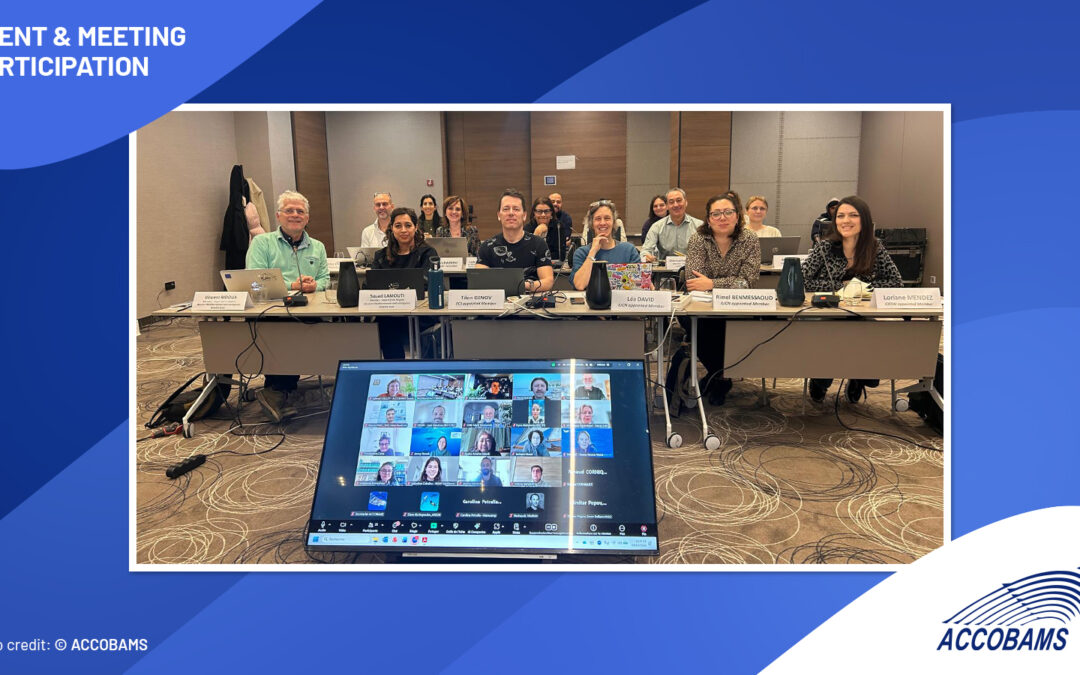
INFO/RAC participated in the seventeenth meeting of the ACCOBAMS Scientific Committee (SC17), the first of the 2026–2028 triennium, held from 4 to 5 February in Tunis.
The meeting brought together experts to guide ACCOBAMS’ scientific work over the next three years. Key topics included the definition of activities and working groups for the triennium, as well as the main scientific priorities, including the second ACCOBAMS Monitoring Initiative, the strengthening of data sharing through NETCCOBAMS, the mitigation of ship strikes and underwater noise, and the promotion of responsible whale-watching practices.
During the meeting, INFO/RAC reaffirmed its commitment to data integration, knowledge sharing, and support for regional decision-making processes. The Institute will continue to collaborate with the ACCOBAMS Secretariat and the Scientific Committee to integrate relevant NETCCOBAMS datasets into the MAP Knowledge Management Platform (KMaP), in line with the UNEP/MAP Data Policy and IMAP requirements. In this context, INFO/RAC expressed its availability to be part of the NETCCOBAMS Working Group.
Within the framework of the new IMAP cycle, INFO/RAC will also develop new Data Standards and Data Dictionaries, in close cooperation with the relevant MAP components and ACCOBAMS, to support countries in their data reporting.
In the Work Programme of the newly launched biennium, INFO/RAC will focus on consolidating KMaP operations and strengthening interoperability, with particular attention to data quality, usability, and effective use in support of regional assessments.
INFO/RAC highlighted the full operational status of the platform presented at the sixteenth ACCOBAMS Scientific Committee, which includes over 16,000 entries and serves as the central access point to UNEP/MAP knowledge.
KMaP already enables data management, analysis, and visualization through interactive maps, dashboards, and statistics, and is designed to interoperate with partner platforms, such as NETCCOBAMS.
Through this collaboration, INFO/RAC aims to ensure the valorization of ACCOBAMS data, their accessibility, and their translation into clear evidence to support policies, monitoring activities, and cetacean conservation actions in the Mediterranean and Black Sea regions.
During the meeting, Simone Panigada was elected President and Pavel Gol’Din Vice-President of the Scientific Committee.